The Vault
Men & Identity
The Father You Had, The Father You Become
What men inherit from fathers, including the things nobody ever said
A reflective essay on fathers, sons, masculinity, inherited family patterns, emotional inheritance, and what men choose to carry forward.
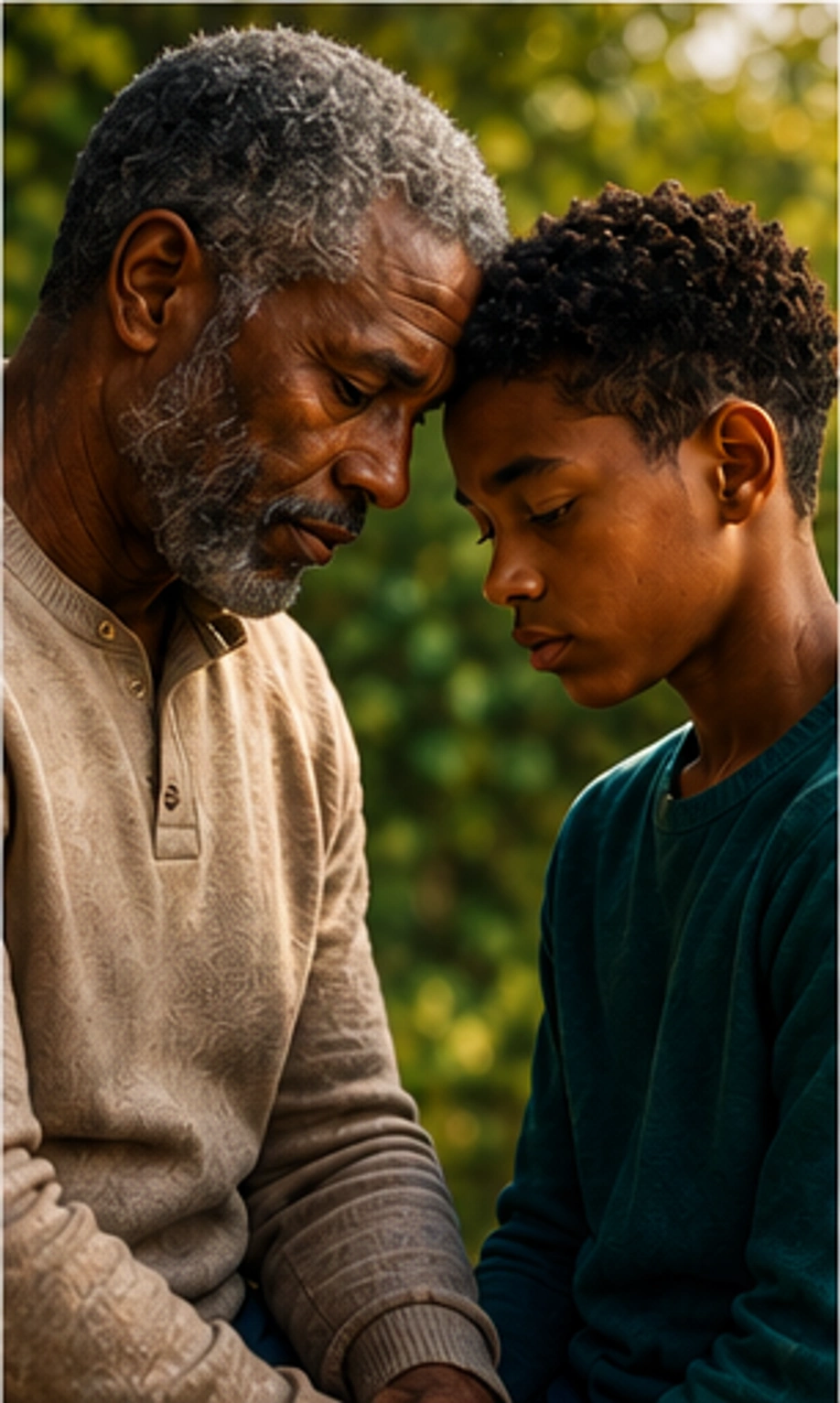
Long before a boy understands masculinity as an idea, he is already studying it.
He watches.
He notices how his father speaks when he is angry, how he treats people with less power, whether he apologises, how he handles money, whether affection comes easily, what happens when he fails and what he does when he is frightened.
If his father is absent, the absence teaches too.
Sometimes a boy studies a stepfather, grandfather, uncle, older brother, teacher, coach or the men he sees on a screen. Sometimes he builds his idea of manhood from fragments because there is no single person close enough to provide the whole picture.
By adulthood, much of what he learned has become so ordinary that he no longer recognises it as learning.
It is simply how things are done.
Until one day he hears his father's voice come out of his own mouth.
Not every inheritance is deliberate
When people talk about what parents pass to children, they often think about money, property, genes, traditions or family names.
But families pass down instructions too.
Some are spoken openly: work hard, look after your family, never steal, respect your elders.
Others are demonstrated.
We do not talk about problems. Men do not cry. Your word matters. Never let anybody disrespect you. Family business stays inside the family. Money is always going to be difficult. Education is your way out. Do not trust anybody completely. Marriage means staying no matter what.
You may never have been explicitly taught any of these things. Repetition was enough.
Children do not need a lecture when they have a living example.
The good travels too
There is a temptation in conversations about family patterns to turn every parent into a source of damage.
That is too easy.
You may have inherited extraordinary things from your father.
Discipline. Humour. Curiosity. Work ethic. Patience. Practical intelligence. Loyalty. The ability to remain calm under pressure. A commitment to family. A refusal to give up.
Perhaps he showed up every single day.
Perhaps he taught you how to make something with your hands, how to conduct yourself, how to treat people or how to survive circumstances he himself had barely survived.
Understanding inheritance does not mean putting your father on trial.
It means becoming conscious enough to decide what continues.
You are allowed to keep what was good.
Love does not make someone complete
A father can love his son deeply and still give him patterns that later become difficult.
He can teach strength while accidentally teaching emotional silence. He can teach independence while making help feel shameful. He can teach discipline while making mistakes feel dangerous. He can teach respect while expecting obedience. He can work every hour available to give his children a better life and unintentionally teach them that providing matters more than presence.
Human beings rarely pass down only wisdom or only wounds.
Usually, we receive both from the same hands.
That is what makes examining family patterns complicated. The person who gave you something difficult may also have sacrificed enormously for you.
Both things can be true.
The absent father is still present in the story
Absence creates its own architecture.
A father who left, died, disappeared emotionally, was incarcerated, lived elsewhere or was simply never known can still occupy enormous space in a son's understanding of himself.
The unanswered questions can become part of identity.
Why wasn't I enough for him to stay? Am I like him? Will I become him? What was wrong with him? What is wrong with me?
Some men spend years consciously trying not to become their fathers. The irony is that organising your life entirely around not becoming someone still allows that person to shape the design.
Opposition is not always freedom.
If your father was absent and you promise yourself you will never miss a single moment of your children's lives, that promise may create something beautiful. But even a beautiful choice deserves to become conscious.
Otherwise, fear is still holding the pen.
"My dad never told me he loved me"
For some men, this sentence carries enormous weight.
For others, it does not.
Perhaps love was obvious in your house even if the words were rare. Your father got up at five every morning. He drove across town when the car broke down. He appeared whenever you needed him. He fixed the boiler, paid the rent, stood on the touchline and quietly made sure things worked.
That may have been his vocabulary.
But sometimes a son needed to hear something his father did not know how to say.
"I am proud of you."
"I was wrong."
"I love you."
"You do not have to be like me."
"I was frightened too."
The absence of those sentences can follow a man for decades, particularly if he continues waiting for them from someone who may never have learned how to speak them.
At some point, adulthood asks a difficult question:
What will you do if the person who created the wound cannot be the person who closes it?
Becoming a father changes the view
Many men understand their fathers differently once they have children of their own.
Some become more compassionate. They suddenly see how young their father actually was, how much pressure he carried and how little preparation anybody gave him.
Others become angrier.
They hold their own child and think, How could you have done that to me?
Both reactions are possible.
Parenthood can turn childhood memories around and show you their other side.
It can also expose inherited behaviour with startling speed. You hear yourself using the same phrases. You respond to disobedience in the same way. You withdraw during conflict. You become the disciplinarian you once feared or the absent presence you promised never to become.
That moment can be frightening.
It can also be useful.
Because recognition gives you something repetition never does.
A choice.
Your children do not need a perfect man
Trying to correct your father's mistakes can become another trap.
If he was absent, you become permanently available. If he was strict, you refuse to discipline. If he was emotionally distant, you try to be endlessly expressive. If he struggled financially, you make money the centre of everything.
We often overcorrect before we learn to integrate.
Your children do not need you to become the exact opposite of your father.
They need you to become conscious enough to respond to the child actually standing in front of you.
Sometimes that means firmness. Sometimes softness. Sometimes teaching. Sometimes listening. Sometimes admitting that you got it completely wrong.
A child does not need evidence that his father is infallible.
There may be far more value in seeing that a man can make a mistake, take responsibility, repair what he can and remain whole.
The inheritance can end with you
Ending a pattern does not always look dramatic.
Sometimes it is simply saying something your father never said.
Sometimes it is staying in the room during a conversation your family would normally avoid.
Sometimes it is learning about money because nobody taught you.
Sometimes it is refusing violence.
Sometimes it is allowing affection.
Sometimes it is apologising to your son.
Sometimes it is forgiving your father without pretending what happened was acceptable.
Sometimes it is deciding not to forgive and still refusing to build your identity around the injury.
Breaking a pattern does not require erasing where you came from.
It means refusing to hand something forward unconsciously.
Something to sit with
Think about your father, or the man who most closely occupied that position in your life.
What did he teach you about being a man without ever saying it?
What did he do exceptionally well?
What did he struggle to give?
Which of his qualities are alive in you now?
Which of his patterns appear when you are under pressure?
What are you determined to do differently, and is that decision coming from wisdom or fear?
Then consider the next generation, whether you have children or not.
What travels through you does not only reach sons and daughters. It reaches partners, friends, colleagues, people you lead and people who learn what manhood looks like partly by watching you.
You did not choose the first version of the map.
But adulthood gives you the opportunity to edit what gets passed on.
You can honour the man who came before you without becoming a copy of him.
And you can acknowledge what hurt without allowing the wound to become the family inheritance.